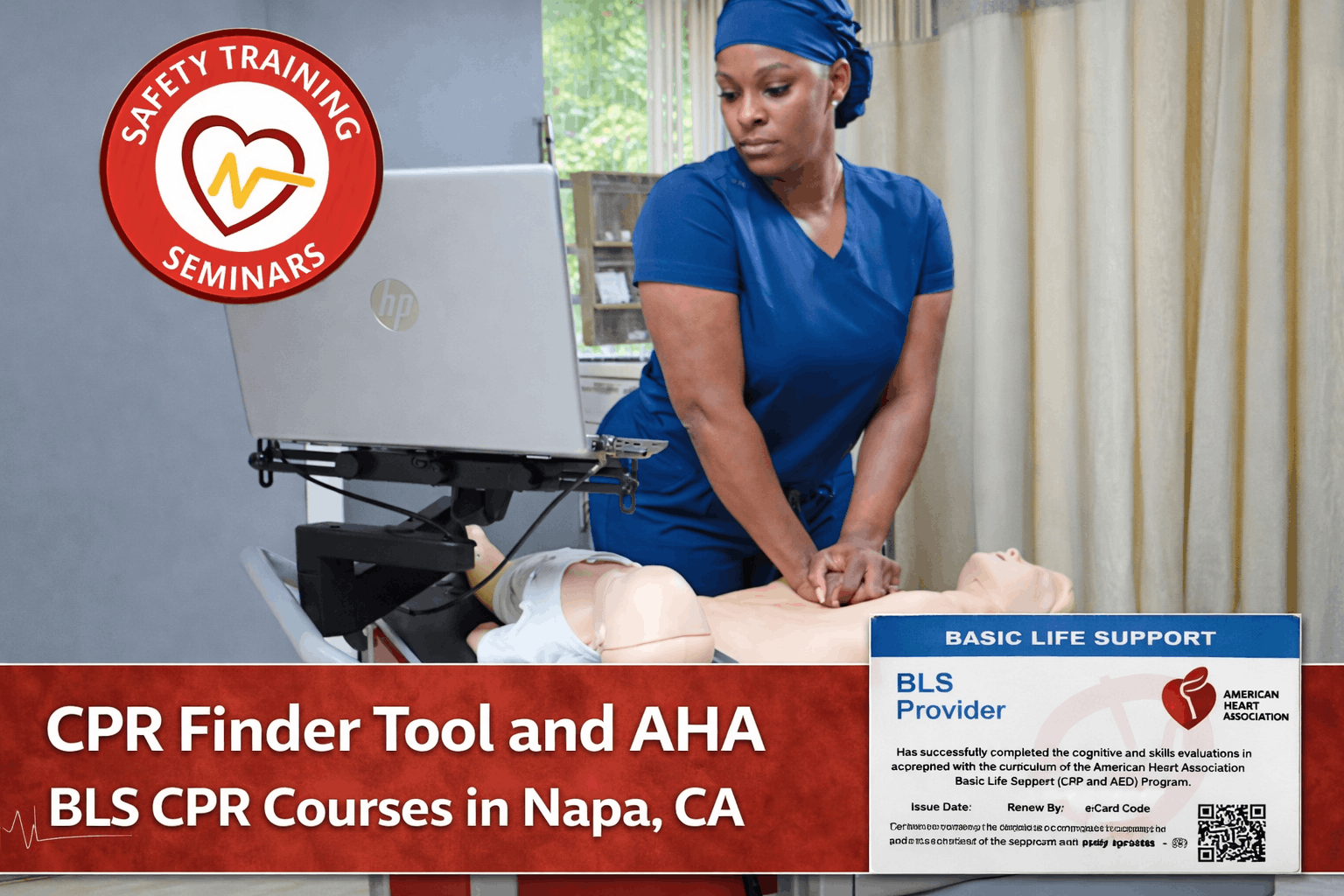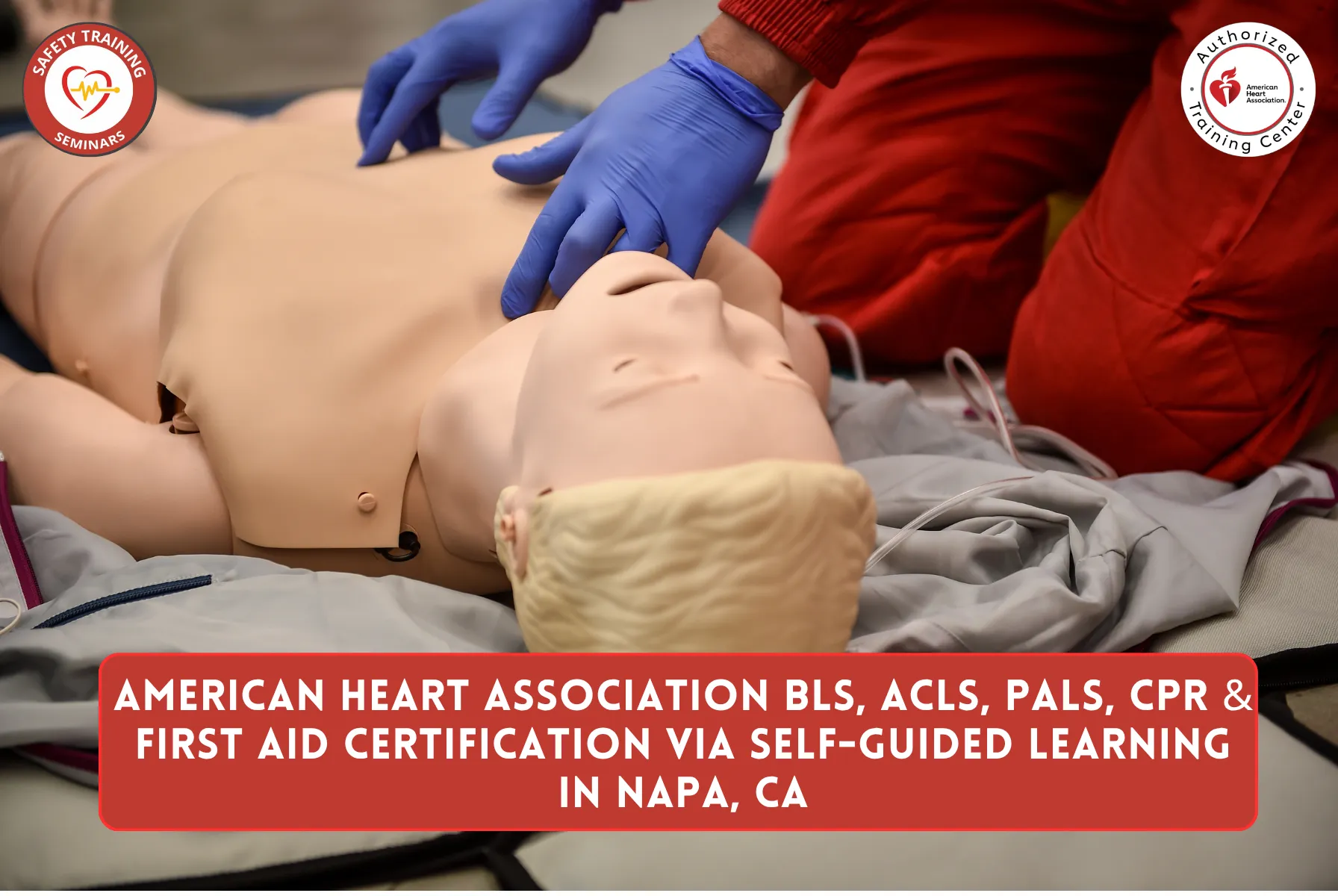
For healthcare professionals, students, educators, caregivers, and workplace teams in Napa, California, finding the right CPR or life-support course often starts with understanding the training format. American Heart Association Self-Guided Learning can provide a flexible way for eligible learners to complete the educational portion of applicable training while addressing hands-on practice and skills requirements when required.
Self-Guided Learning may be relevant for people looking for BLS, ACLS, PALS, CPR, AED, or First Aid training. However, these courses are not interchangeable. A nurse may need BLS, a healthcare professional involved in adult cardiovascular emergencies may need ACLS, while a teacher or workplace employee may need CPR/AED or First Aid training.
For Napa-area learners, understanding these differences before registering can help prevent choosing a course that does not match an employer, school, or professional requirement.
Key Takeaway
American Heart Association Self-Guided Learning allows learners to work through applicable educational material independently rather than relying entirely on a traditional scheduled classroom format. Depending on the specific course, hands-on practice and skills verification may still be part of completing the training. Always confirm the exact course requirement before enrolling.
What Does AHA Self-Guided Learning Mean?
Self-Guided Learning is designed around a learner-controlled educational experience. Instead of completing every component during one traditional classroom session, the learner can work through the educational material independently and then complete any required in-person practice or skills-related components associated with the course.
The process can vary depending on the particular AHA course, so learners should review the requirements for the training they intend to take.
A typical experience may involve:
- Choosing the appropriate course based on your professional, academic, or workplace requirement.
- Completing the educational component independently.
- Practicing required hands-on skills when applicable.
- Completing skills testing or other course requirements when required.
- Receiving the applicable course completion documentation or eCard after successfully meeting the requirements.
This distinction matters because Self-Guided Learning should not automatically be treated as an online-only CPR course. Some training requirements include hands-on skills practice or verification, particularly for healthcare-focused courses.
Self-Guided Learning vs. Online-Only Training
An online-only course may consist primarily or entirely of digital learning. That format may not satisfy an employer, school, healthcare organization, or other organization that requires an accepted course with hands-on skills components.
Self-Guided Learning can combine independent education with applicable hands-on requirements. The exact process depends on the course, which is why checking the requirements before registration is a practical first step.
BLS Classes in Napa for Healthcare Professionals
Basic Life Support (BLS) is generally associated with healthcare professionals and other individuals whose roles require a higher level of basic life-support training.
Potential learners can include nurses, nursing students, physicians, EMTs, paramedics, medical assistants, dental professionals, and other healthcare personnel. Whether BLS is required depends on the person’s role, employer, school, or professional organization.
For a healthcare student in Napa preparing for clinical training, for example, selecting BLS rather than a general-public CPR course may be important if the student’s program specifies BLS training.
People searching for BLS classes in Napa should therefore check the exact course name and completion requirements requested by their school or employer before choosing a training format.
For local course information, learners can review the BLS and CPR classes in Napa available through the local training option.
ACLS Training in Napa
Advanced Cardiovascular Life Support (ACLS) is intended for appropriate healthcare professionals involved in managing adult cardiovascular emergencies. It goes beyond the basic life-support training commonly associated with BLS and is generally relevant to professionals whose clinical responsibilities involve advanced emergency cardiovascular care.
Doctors, nurses, paramedics, and other healthcare professionals may encounter workplace or professional requirements for ACLS, but those requirements are not identical across every role.
If you are considering ACLS training in Napa, verify the course requirement with your employer, healthcare organization, school, or applicable professional body. Self-Guided Learning may be useful for learners who need flexibility around the educational portion, but the course’s specific completion requirements still need to be satisfied.
PALS Classes in Napa for Pediatric Emergency Training
Pediatric Advanced Life Support (PALS) focuses on emergency care involving pediatric patients and is intended for appropriate healthcare professionals.
PALS may be relevant to healthcare workers who have responsibilities involving pediatric emergency assessment and treatment. A healthcare professional working with children should not assume that BLS, ACLS, or a general CPR course automatically fulfills a PALS requirement.
Someone searching for PALS classes in Napa should first determine whether PALS is specifically requested by their employer, clinical program, or healthcare organization. Once the requirement is established, the learner can compare available training formats and determine whether a Self-Guided Learning option fits their schedule and course requirements.
CPR, AED and First Aid Training in Napa
CPR, AED, and First Aid training can serve a broader audience outside traditional healthcare roles. Teachers, childcare providers, coaches, fitness professionals, workplace employees, caregivers, parents, and community members may all have reasons to seek this type of training.
The appropriate course depends on the situation.
CPR/AED training focuses on responding to cardiac emergencies and using an automated external defibrillator when appropriate. First Aid training addresses a wider range of common injuries and medical situations. Some workplaces or organizations may request a combination of CPR, AED, and First Aid training.
For someone searching for CPR classes in Napa, the important question is not simply which course is available. It is whether the course matches the requirement being imposed by the employer, school, childcare organization, workplace, or other institution.
Which Course Should You Choose?
The following guide provides a starting point:
| Course | Typical Audience |
| BLS | Healthcare professionals and appropriate healthcare students |
| ACLS | Healthcare professionals involved in adult cardiovascular emergency care |
| PALS | Healthcare professionals involved in pediatric emergency care |
| CPR/AED | General public and workplace audiences |
| First Aid | Workplace, education, childcare, community, and general audiences |
These categories are useful for narrowing your search, but they should not be treated as universal professional or legal requirements. A healthcare program may have different requirements from an employer, and licensing or credentialing expectations can vary by profession.
Before enrolling, confirm the specific course with your employer, school, healthcare organization, training program, or applicable licensing organization.
Why Self-Guided Learning May Work for Napa Learners
Napa’s training audience includes more than one type of learner. A nursing student may be balancing coursework and clinical responsibilities, while a healthcare employee may have rotating work obligations. Teachers, childcare workers, fitness professionals, and workplace employees may also have limited availability during standard classroom hours.
For these learners, a self-directed educational format can be attractive because the educational component can be completed independently rather than requiring every learning activity to occur during one fixed classroom session.
Someone traveling between Napa and nearby communities may also value being able to organize the educational portion around work, school, or other commitments. That flexibility does not remove course requirements, however. If hands-on practice or skills testing applies, those components still need to be completed according to the course process.
Local Self-Guided Learning Options in Napa
Choosing a local training option can make the next step easier because learners can begin with a location and course selection that is relevant to their area.
Safety Training Seminars provides a Napa training location at 2011 Soscol Ave, Suite 7, Napa, CA 94558.
Before registering, review the specific course information and determine whether you need BLS, ACLS, PALS, CPR/AED, First Aid, or another training option. If you are a healthcare student or employee, compare the course details against the requirement provided by your school or workplace rather than selecting a course solely because the title contains “CPR.”
You can also review local ACLS and PALS training options to compare the courses that may be relevant to healthcare professionals and students.
What to Check Before Enrolling
A few minutes of verification can help avoid selecting the wrong course.
Before starting, ask:
- What exact course does my employer or school require?
- Does the requirement specify BLS, ACLS, PALS, CPR/AED, or First Aid?
- Is Self-Guided Learning an acceptable format for my situation?
- Does the course include required hands-on practice or skills testing?
- What course completion documentation is expected?
- Does my organization have any additional requirements?
These questions are especially useful for healthcare workers and students, because completing a course is not necessarily the same thing as satisfying every organization’s individual requirement.
Frequently Asked Questions
Can I complete BLS through American Heart Association Self-Guided Learning in Napa?
Potentially, depending on the specific course format and requirements. BLS training may include an independent educational component along with applicable hands-on practice and skills requirements. If your employer or school requires BLS, confirm that the particular Self-Guided Learning option meets its stated requirements before registering.
Is Self-Guided Learning the same as taking CPR completely online?
No. Self-Guided Learning should not automatically be considered an online-only course. Depending on the course, learners may need to complete hands-on practice or skills verification in addition to independent educational work. Always review the requirements of the specific course you plan to take.
Which course is generally appropriate for a Napa nurse?
BLS is commonly relevant to nurses, while ACLS or PALS may also apply depending on the nurse’s role and workplace. A nurse working with adult cardiovascular emergencies may have an ACLS requirement, while a pediatric-focused role may involve PALS. The employer or healthcare organization should confirm the applicable course.
Can teachers and childcare workers use Self-Guided Learning?
They may be able to use an applicable Self-Guided Learning option, depending on the course and organization involved. Teachers and childcare professionals commonly encounter CPR, AED, or First Aid training requirements, but the exact course and accepted format can vary. Check the requirements of the school, childcare organization, employer, or other relevant authority.
Where can Napa residents investigate local training options?
Safety Training Seminars offers a local Napa training location for learners investigating applicable CPR and life-support training. Start by identifying the exact course required, then review the relevant local course information and confirm any hands-on or completion requirements before enrolling.
Choosing the Right Training Path in Napa
American Heart Association Self-Guided Learning can be a useful option for learners who want more control over when they complete the educational portion of their training. Its biggest distinction from an online-only course is that applicable hands-on practice and skills requirements may still be part of completing the course.
For Napa healthcare professionals and students, the first priority should be identifying whether BLS, ACLS, or PALS is required. For teachers, caregivers, workplace employees, and community members, CPR/AED or First Aid may be more appropriate.
Once you know the required course, review the relevant Safety Training Seminars option in Napa and verify the completion process before registering. That approach keeps the focus on selecting training that actually matches your professional, academic, or workplace requirement.